


Last Updated: November 15, 2026
Quick Summary
Unflavored collagen powder for coffee is a neutral-tasting, fully dissolving protein supplement that adds collagen peptides to your morning cup without changing its flavor. Add one scoop to your mug, stir firmly for 10 to 15 seconds, and your coffee tastes the same.
- Let hot coffee cool for a minute or two before adding powder, since near-boiling liquid can make it seize.
- For iced coffee, stir the powder into 30 to 60 ml of room-temperature water or milk first.
- A typical collagen serving is 10 to 12 g, so check the label in grams rather than trusting the word scoop.
- Collagen is not a complete protein on its own, so use it alongside other protein sources.
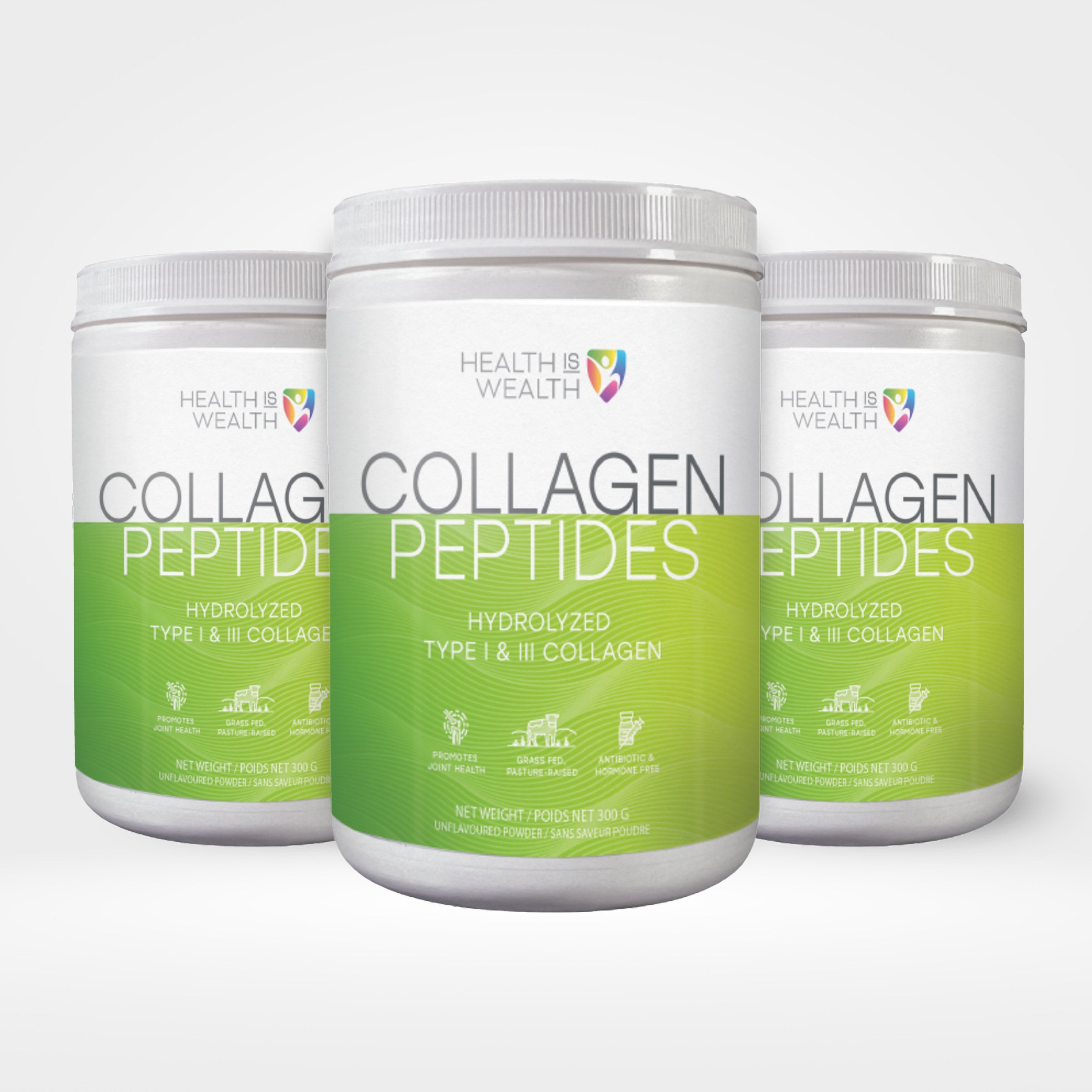
- A single tub costs $37.00, while the three-pack special is $99.00 with a 15% saving per tub.
Table of Contents
- Why Unflavored Collagen Powder Belongs in Your Coffee
- How to Mix Collagen Powder in Coffee Without Clumps
- Does Collagen Powder Dissolve in Hot Coffee?
- A Simple Collagen Coffee Recipe for Busy Mornings
- What Makes the Best Unflavored Collagen Powder
- Dosage, Protein, and What Collagen Can and Cannot Do
- Comparing Your Options: Single Tub, Three-Pack, or Single-Ingredient Bottles
- Ordering Your Collagen Peptides and Building the Morning Habit
- Frequently Asked Questions
Why Unflavored Collagen Powder Belongs in Your Coffee
Unflavored collagen powder for coffee is a neutral-tasting, fully dissolving protein supplement that adds collagen peptides to your morning cup without changing its flavor. It is a simple upgrade for a coffee habit: one scoop, no new routine.
The appeal is practical. Coffee is already a daily ritual for most adults, so adding collagen there removes the extra step that kills most supplement habits. Unflavored collagen powder dissolves into hot or cold liquid and leaves the taste of coffee intact.
What most guides miss is that collagen is a protein, not a flavoring. A scoop adds protein and amino acids, and that is the honest case for it. It is not a substitute for a balanced diet or medical care.
Below, we walk through mixing methods, label checks, dosage, and how to compare formats so you buy once and use it daily.
How to Mix Collagen Powder in Coffee Without Clumps
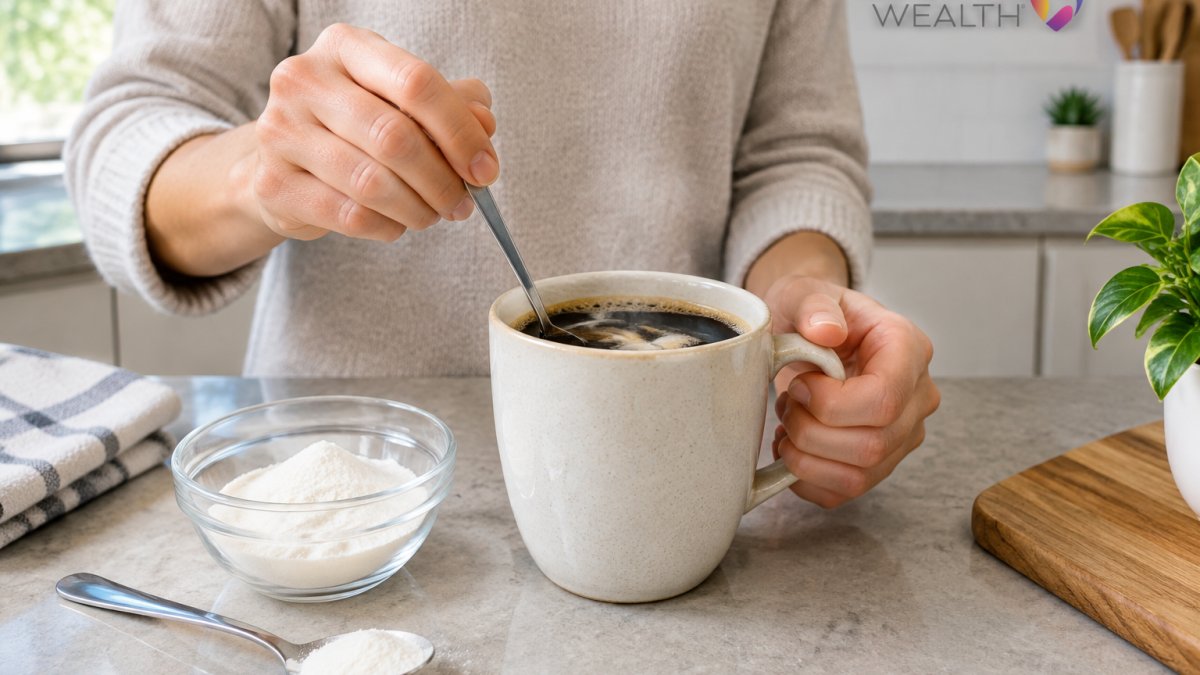
Clumps come from dumping powder into a hot mug and stirring late. The fix is order of operations: liquid first, powder second, agitation immediately. Hydrolyzed collagen peptides dissolve in water, and powder that touches itself before it touches liquid tends to form clumps that a spoon cannot easily break up.
Step-by-Step: Hot Coffee
- Pour your coffee and let it cool for a minute or two. Near-boiling liquid can make powder seize, and coffee straight off a drip brewer is often close to 90 C.
- Add the scoop to the mug, not on top of a dry spoon. A dry spoon carries powder to the surface, where it floats and clumps.
- Stir firmly for 10 to 15 seconds, scraping the bottom of the mug. The bottom is where un dissolved powder settles.
- Check the surface. If flecks remain, stir another 10 seconds before drinking.
A faster route for hot coffee is the paste method: put the scoop in the mug, add just enough coffee to cover it, and stir into a smooth slurry before topping up. The slurry wets every particle at once, which is why it works even in a hurry.
Step-by-Step: Iced Coffee
- Stir the powder into 30 to 60 ml of room-temperature water or milk first. Cold coffee alone gives the powder too little solvent to disperse into.
- Pour the concentrate over ice, then add cold coffee.
- Shake in a sealed jar if you use one. Ten seconds of shaking beats a minute of stirring because it agitates the whole volume, not just the top layer.
A common mistake is adding powder to a dry shaker cup and shaking, which can leave it caking in the corners. Adding liquid first helps.
Milk and milk alternatives can dissolve collagen more slowly than water, so dairy-based iced drinks may benefit from a little extra shaking.
A Repeatable Test You Can Run at Home
You can check how a powder mixes with a simple four-point test that takes one mug and two minutes:
- Aroma: smell the dry powder, then the finished cup. A neutral product should not add a smell to black coffee.
- Grit: take a small sip and press your tongue to the roof of your mouth. Fine sediment indicates incomplete dispersion.
- Foam: look at the surface after stirring. A thin ring is normal for a protein; a thick raft of foam suggests a product with added surfactants or a very fine mill.
- Aftertaste: wait 30 seconds after swallowing. A gelatin-like or bitter note is the tell that separates neutral powders from ones that merely hide behind flavoring.
Run the same test in hot coffee, cold brew, and iced coffee.
Does Collagen Powder Dissolve in Hot Coffee?
Yes, hydrolyzed collagen can dissolve in hot coffee, and it generally disperses more readily in warm liquid than in cold.
Temperature matters more than technique. Very hot coffee can cause fine clumping, so a short pause after brewing helps. Cold coffee needs mechanical help, which is why shaking or a milk frother works better than a spoon.
If you see a slight film on the surface, that is normal for a protein powder and not a sign of a bad product. Stir once more and drink.
A Simple Collagen Coffee Recipe for Busy Mornings
Here is the version we would use on a workday. It takes under two minutes and needs nothing you do not already own.
- 1 scoop unflavored collagen powder, roughly 10 to 12 g
- 250 ml brewed coffee
- 60 ml milk or a milk alternative, optional
- Cinnamon, optional
Brew the coffee and let it sit for a minute. Add the powder to the mug, pour in a splash of the coffee, and stir into a paste. Top with the rest of the coffee and the milk, then stir again. The paste step is the part people skip, and it is the reason their powder clumps.
For iced versions, make the paste with cold milk instead and pour over ice. The recipe scales: two scoops for two mugs, same method. (Source: dietary protein requirements)
What Makes the Best Unflavored Collagen Powder
A good unflavored collagen powder has a short ingredient list, a stated collagen type and source, and a clear serving size in grams.
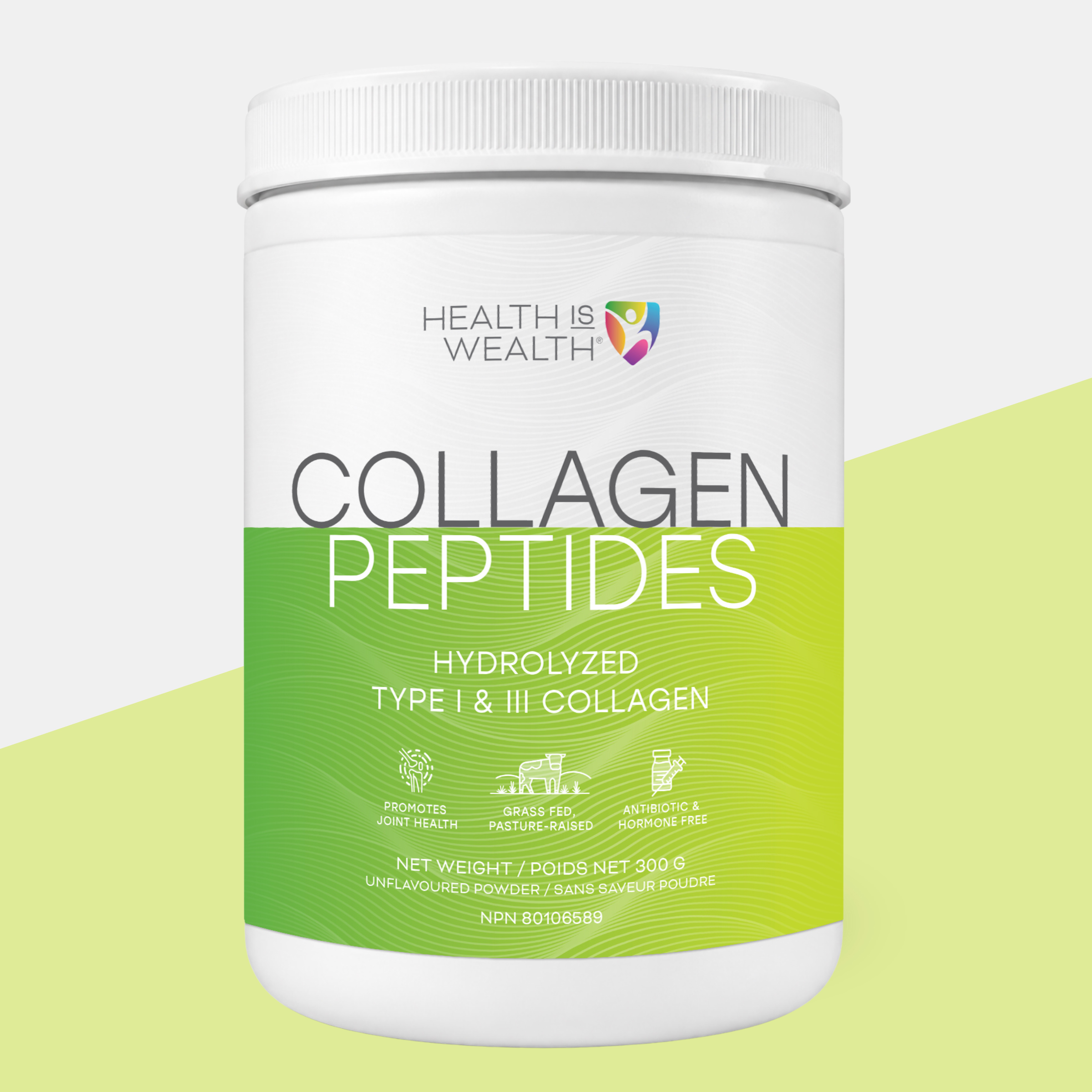
At Health IS Wealth Group Inc, we look for four things before anything else: the collagen type, the source animal, the hydrolysis method, and whether the label lists anything beyond collagen. Our hydrolyzed bovine Type I and III collagen powder is sourced from grass-fed, pasture-raised cattle and made in a Health Canada licensed, GMP-certified facility.
Label Checks That Separate Clean Powders From Filler-Heavy Ones
Some powders contain binders, fillers or sweeteners. Read the non-medicinal ingredients line closely to check for them.
- Collagen type stated: Type I and III for skin, hair, nails and joints
- Source stated: bovine, marine, or porcine
- Serving size in grams, not just "one scoop"
- Non-medicinal ingredients: ideally none
- Testing claim you can verify, not a badge with no detail
A practical note from our side: non-medicinal ingredients are sometimes unavoidable in manufacturing. Capsules, tablets and liquids all need them.
Dosage, Protein, and What Collagen Can and Cannot Do
A serving of collagen peptides is typically 10 to 12 g, and checking the product label will show the protein content per serving. That protein counts toward your day, but it is not a complete protein on its own: collagen is not a complete protein on its own, so it is best used alongside other protein sources.
The coffee-specific math is simple and worth doing once. If you add one scoop to each of two mugs a day, you are adding a measurable amount of powder and protein; check your product label for the exact figures. That is a meaningful shift in your daily totals, and it is the reason serving size in grams matters more than the word "scoop" on the label. A scoop is not a standard unit; it is whatever the manufacturer decided to include.
Comparing Servings Across Products
When you compare powders, line up four numbers per serving: grams of powder, grams of protein, calories, and collagen type. A 10 g serving at 9 g protein is close to pure collagen peptide. A 12 g serving at 6 g protein means the rest is something else, often flavoring, sweetener, or a carrier. Neither is automatically wrong, but the second product is not the clean single-ingredient powder the front label implies.
For coffee, the practical target is one serving per mug, not a heaped scoop. More powder than the label specifies does not dissolve better and can leave grit at the bottom of the cup.
What the Evidence Supports, and What It Does Not
Collagen is not a treatment for any condition. Collagen peptides have been studied for skin, joint and bone health, with results that vary by person and by dose. Consult a qualified health professional for guidance on what suits you.
Anyone with a medical condition, or taking prescription medication, should speak with a qualified health professional before adding a supplement.
Watch out: collagen is not a substitute for a complete protein source, and a coffee habit alone will not close a protein gap. Treat the scoop as an addition to your day, not a replacement for a meal.
If you want the fuller picture on serving sizes and expectations, our guide on how to choose and use collagen dietary supplements goes deeper than a coffee mug allows.
Comparing Your Options: Single Tub, Three-Pack, or Single-Ingredient Bottles
The format decision comes down to how sure you are that you will keep the habit. Here is how the options compare.
Option |
Price |
Best For |
Trade-off |
|---|---|---|---|
Single tub |
$37.00 |
First-time buyers testing the habit |
Lowest upfront cost, no volume saving |
Three-pack special |
$99.00 |
Daily users who already know they like it |
Higher upfront spend, 15% saving per tub |
Separate single-ingredient bottles |
Often exceeds $100 combined |
Nobody, in our view |
More bottles, more scoops, more cost |
Our single tub is the sensible starting point. If you finish it and want to continue, the three-pack special drops the per-tub cost.
Best for: daily coffee drinkers who want one scoop and no flavor change. Skip if: you want a flavored creamer or a product with added sweeteners.
Ordering Your Collagen Peptides and Building the Morning Habit
Habit beats willpower. Put the tub beside the coffee maker, not in a cupboard, and the scoop becomes part of the routine within a week.
Our collagen peptides are available through select health food retailers and online, including Amazon Canada. Once it arrives, start with one scoop in your first mug of the day and keep the paste step. If you want more ways to work it in, our guide on how to incorporate collagen into your daily routine covers options beyond coffee.
Most people who abandon a collagen supplement do so because the powder clumps, tastes off, or lives in a cupboard they forget to open. Health IS Wealth Group Inc formulates with hydrolyzed bovine Type I and III collagen from grass-fed, pasture-raised cattle, with no binders, fillers or sweeteners.
Frequently Asked Questions
Can you put unflavored collagen powder in hot coffee?
Yes. Hydrolyzed collagen peptides dissolve in hot coffee, though very hot liquid can make them clump if you dump the powder in all at once. Add the powder to a small amount of lukewarm liquid first or sprinkle it in slowly while stirring. Let the coffee cool for a minute or two after brewing, then stir for 20 to 30 seconds. Unflavored collagen powder has no taste, so it will not change the flavor of your coffee.
How much collagen powder should you put in coffee?
Check the serving size on your specific tub, since grams per serving vary between brands, and follow the label directions.
Does unflavored collagen change the taste or texture of coffee?
Unflavored collagen is intended to have a neutral taste, so the coffee flavor should stay largely the same. Using too much powder in too little liquid may make coffee feel thicker. Stirring longer or shaking in a sealed jar can help with clumps in iced coffee.
What should you look for in the best unflavored collagen powder for coffee?
Look for hydrolyzed collagen peptides, which dissolve more readily than unhydrolyzed collagen. Check the source (bovine or marine), whether the cattle are grass-fed and pasture-raised, and the protein content per serving. Read the non-medicinal ingredients list closely: binders, fillers, and sweeteners are common in powders and can add taste or texture you did not want in coffee.


Comments